
Transfer Function

Implements transfer function
Category: Dynamics
Description:
The Transfer Function can be described by the following equation:
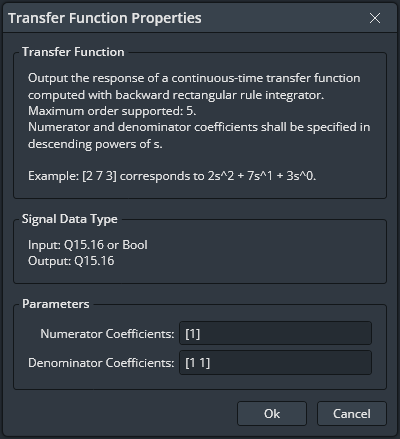
Figure 1 - Transfer function parameters configuration
Figure 1 defines a first-order transfer function equivalent to:
Figure 2 shows an example using the transfer function from Figure 1.

Figure 2 - Step response of a transfer function
The step response of the system is depicted in Figure 3. In this simulation, the Task Frequency was set to 5Hz. Internally, it is implemented using Backward Euler for numerical integration, since S-domain can only be emulated. This implementation is very imprecise due to numerical integration and fixed-point issues. It is recommended to use discrete-time transfer function defined in Z-domain when using high order transfer functions.
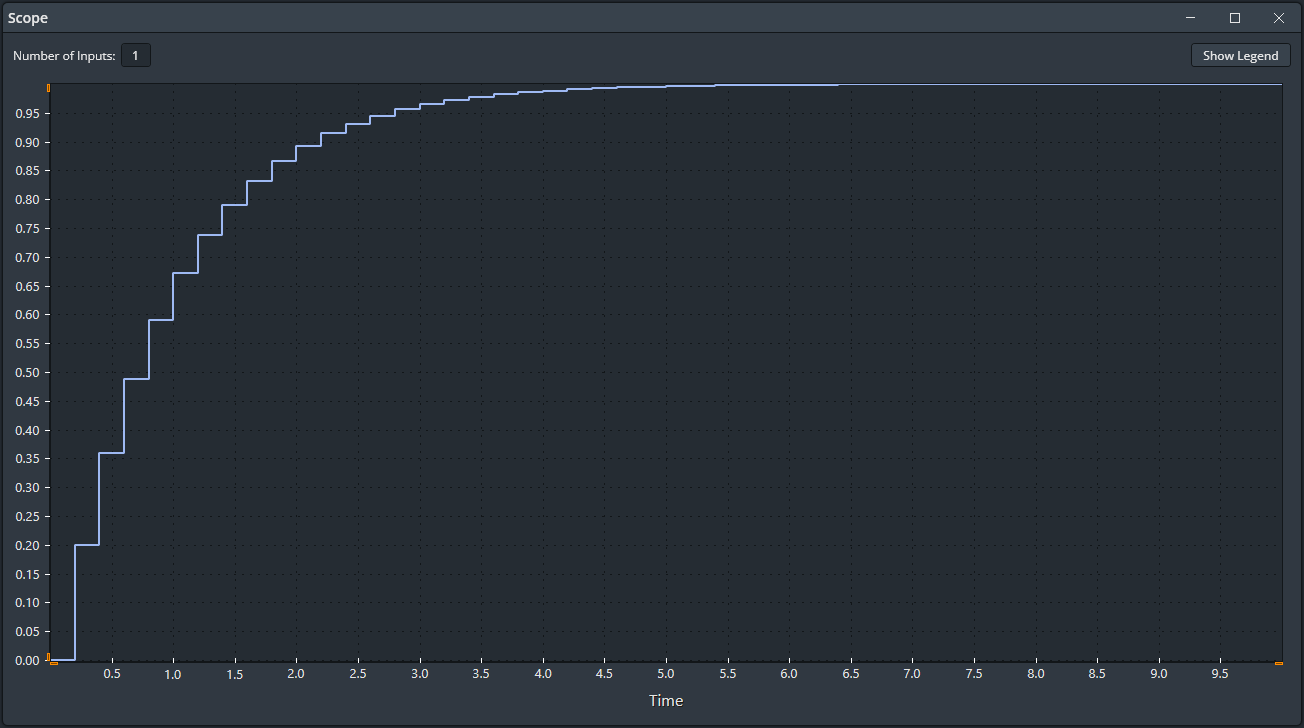
Figure 3 - Discrete-time step response in a Scope
Parameters:
Vector row that sets the coefficients of the polynomial function of the numerator.
The number of elements of this vector must be less or equal the number of elements in the Denominator Coefficients.
Vector row that sets the coefficients of the polynomial function of the denominator.
The maximum number of coefficients is five, i.e., the Transfer Function block can implement up to fifth order transfer functions.
Ports:
Input
The signal flowing through this port acts as an input signal to the transfer function.
Data Types:
Output
The signal flowing from this port is the response of the transfer function to the input signal injected.
Data Types:
About MWF
MWF is a traditional Brazilian company that provides a wide range of electronic and mechatronic products for industry sectors such as automotive, agricultural machinery and aerospace.
Contact Us
Rua Doutor Siqueira, 139 / Sala 804 Campos dos Goytacazes - RJ, Brasil
contact@mwf-technologies.com
© 2018-2026 MWF. All rights reserved.